PolyAnno: Further Product Development 2

This is part of my series of posts about the PolyAnno project – more here Separating PolyAnno from "The Polyglot Project" I then intended to release the PolyAnno package separately from the project specifically for the University of Edinburgh. I felt that it was important to create reusable code specifically for the providing the combination … Continue reading PolyAnno: Further Product Development 2
PolyAnno: Initial Ideas and Research 1

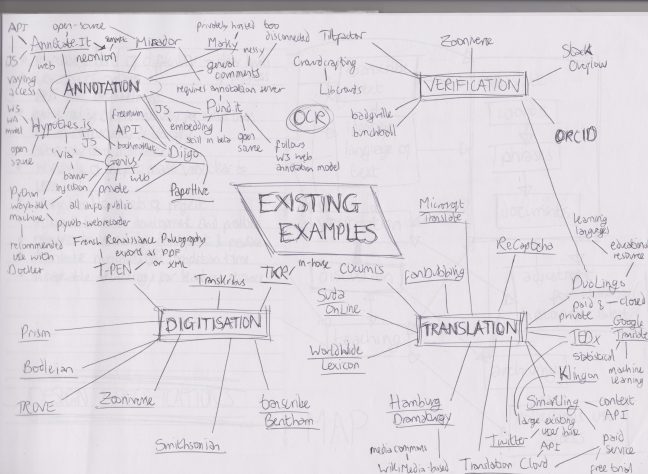
This is part of my series of posts about the PolyAnno project - more here Dividing Up the Problem My first tactic was to split the problem into several sections: Digitisation Transcription Translation Verification Gamification I then tried to investigate existing examples of products and projects within these fields to analyse and I quickly realised … Continue reading PolyAnno: Initial Ideas and Research 1

PolyAnno: DragonDrop UI Design

This is part of my series of posts about the PolyAnno project – more here Basics To make development easier, I separated the development of the front-end Javascript and CSS package to allow me to generate, adjust the size of, drag and drop, adjust responsively to screen size, minimise, and then delete, boxes across the … Continue reading PolyAnno: DragonDrop UI Design

5 Step Instructions for Making A Rag Rug

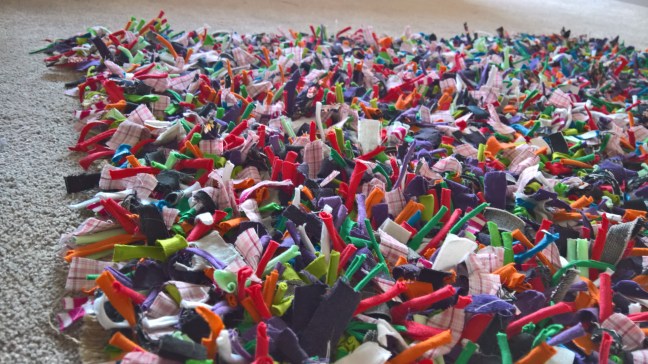
  Background One of my brothers used to always insist on going to the Duxford Imperial War Museum for his birthday every year to see all the planes he loved so much, and I think it must have been there somewhere maybe that I saw it first - a craft commonly practised by those hiding … Continue reading 5 Step Instructions for Making A Rag Rug

PolyAnno: Polyanno Storage

This is part of my series of posts about the PolyAnno project – more here Basics Eventually I decided it would be easier to separate out development of the longer term storage i.e. the Node/Express/MongoDB/Mongoose framework such that it can be installed separately and understood more simply in isolation. The Github repo can currently be … Continue reading PolyAnno: Polyanno Storage

PolyAnno: Transcription

This is part of my series of posts about the PolyAnno project - more here Getting Content So when I started the project I definitely thought the most difficult of the annotations to handle would be the translations and so my immediate focus regarding with the transcriptions was more to just get them as quickly … Continue reading PolyAnno: Transcription

Polyanno: Basic API Design

This is part of my series of posts about the PolyAnno project - more here Storage and API Setup To store the annotations I decided to use MongoDB as a classic NoSQL, non-relational database to store the JSON-LD files because of its support for handling JSONs. I decided for simplicity to use Mongoose as a … Continue reading Polyanno: Basic API Design

Introducing… Superhydrophobic Whisk Design

So every week the Engineering Teaching Office at my university email us all with a newsletter which a few weeks contained, amongst other things, a link to the Electrolux Ideas Lab competition. Intrigued of course I gave it a look, and saw the challenge to be a relatively simple one - how to get more … Continue reading Introducing… Superhydrophobic Whisk Design

PolyAnno: Image UI Design

This is part of my series of posts about the PolyAnno project - more here The Images So the first consideration I had with the transcription design was not the texts but the images themselves. Firstly, images taken as digital copies of collections like Edinburgh's are taken at incredibly high resolutions - every possible pixel … Continue reading PolyAnno: Image UI Design

PolyAnno – Adventures in Annotation

So I started several months ago a part time internship within the Library and Information Services group at the University of Edinburgh but now I am in my final week and I feel I should write up the fantastic experience I have had working on this project. Others might just find it interesting to read … Continue reading PolyAnno – Adventures in Annotation